Chimney leak repair in Fargo
Most chimney leaks start at the flashing, the crown, the cap or the mortar. Here is how to tell which, and what to do first.
Prefer to talk? Call (701) 936-7113.
Request a free quote
How to tell your chimney is leaking
- Brown or yellow stains on the ceiling or wall beside the chimney
- A damp or musty smell in the attic or near the fireplace
- Water in the firebox after rain or snowmelt
- White powder or dark damp patches on the brick
- Peeling paint or wet insulation near the chimney
Where the water usually gets in
Most chimney leaks come from one of four places. A pro usually checks them in this order, because the cheaper fixes come first.
- Flashing: the metal seal between the chimney and the roof. It lifts, rusts or loses its sealant, and snowmelt runs behind it.
- Crown: the slab across the top. Cracks let water into the brick below.
- Cap: a missing or rusted cap lets rain straight down the flue.
- Brick and mortar: crumbling joints and flaking brick soak up water.
Is it really a leak?
Not every drip is a leak. A new high-efficiency furnace or water heater can send cooler exhaust into an old, unlined chimney. Moisture condenses inside the flue and can stain walls and ceilings. A pro with a camera can tell the difference.
Why Fargo chimneys leak
Fargo's winters pile snow against the chimney, melt it on warm days and refreeze it at night. That cycle works water into every small gap, and leaks often show up first during spring snowmelt.
What to do before the pro arrives
- Stay off a snowy or icy roof.
- Put a bucket or towels under active drips and move valuables.
- Photograph the stains, and the chimney from the ground, with dates.
- Skip roofing tar or caulk. It can trap water and hide the real source.
Chimney details, up close
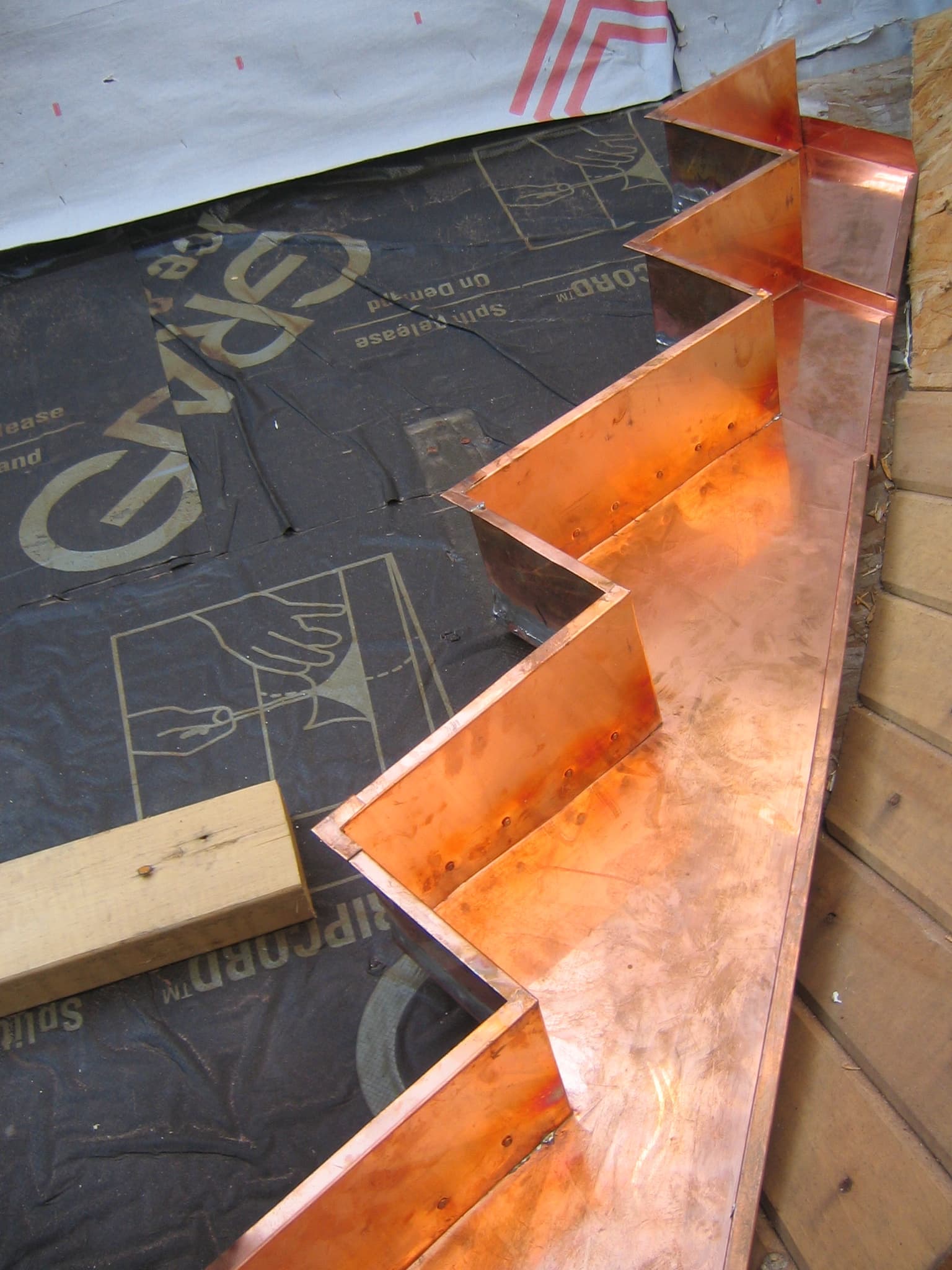
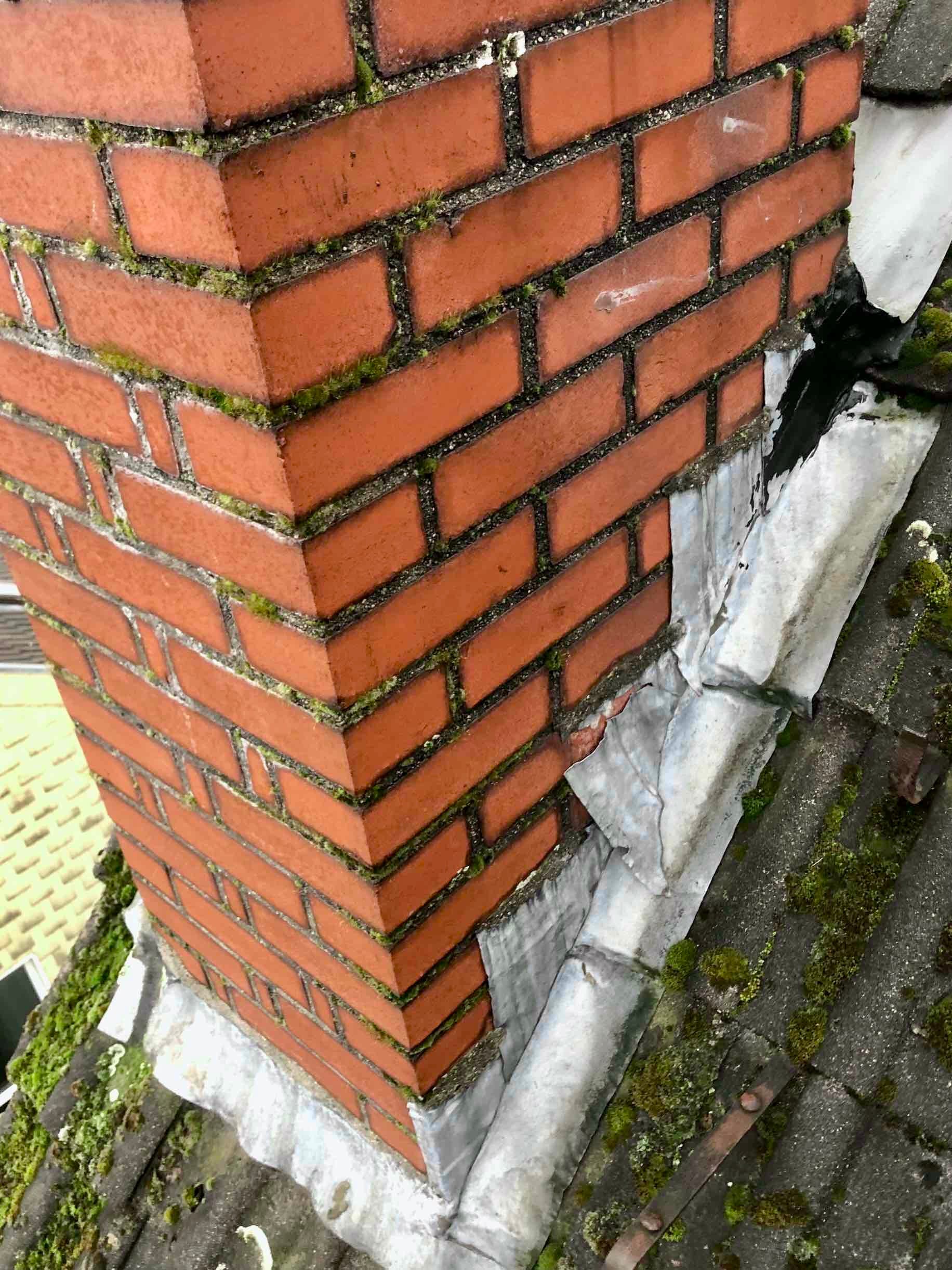
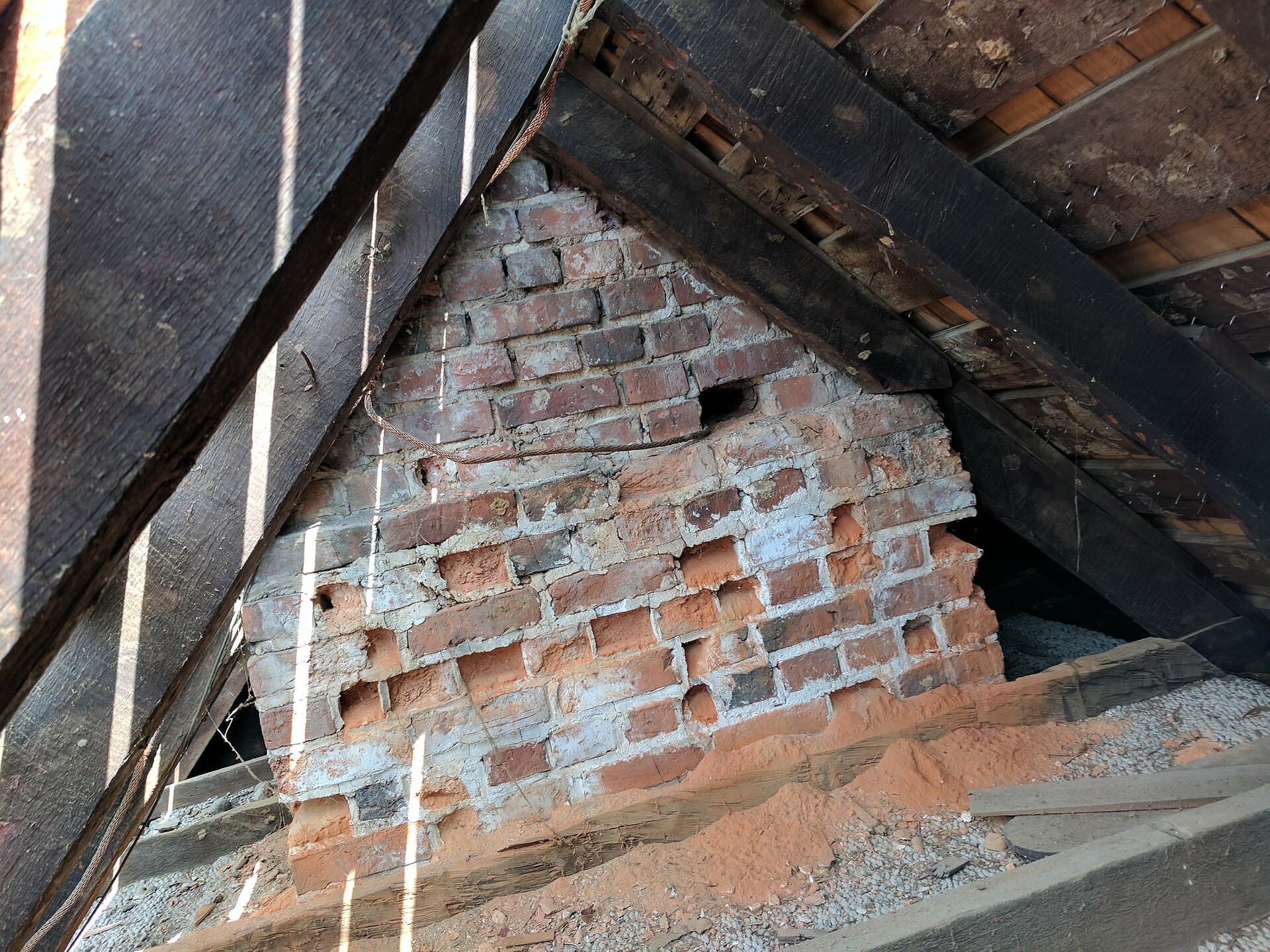
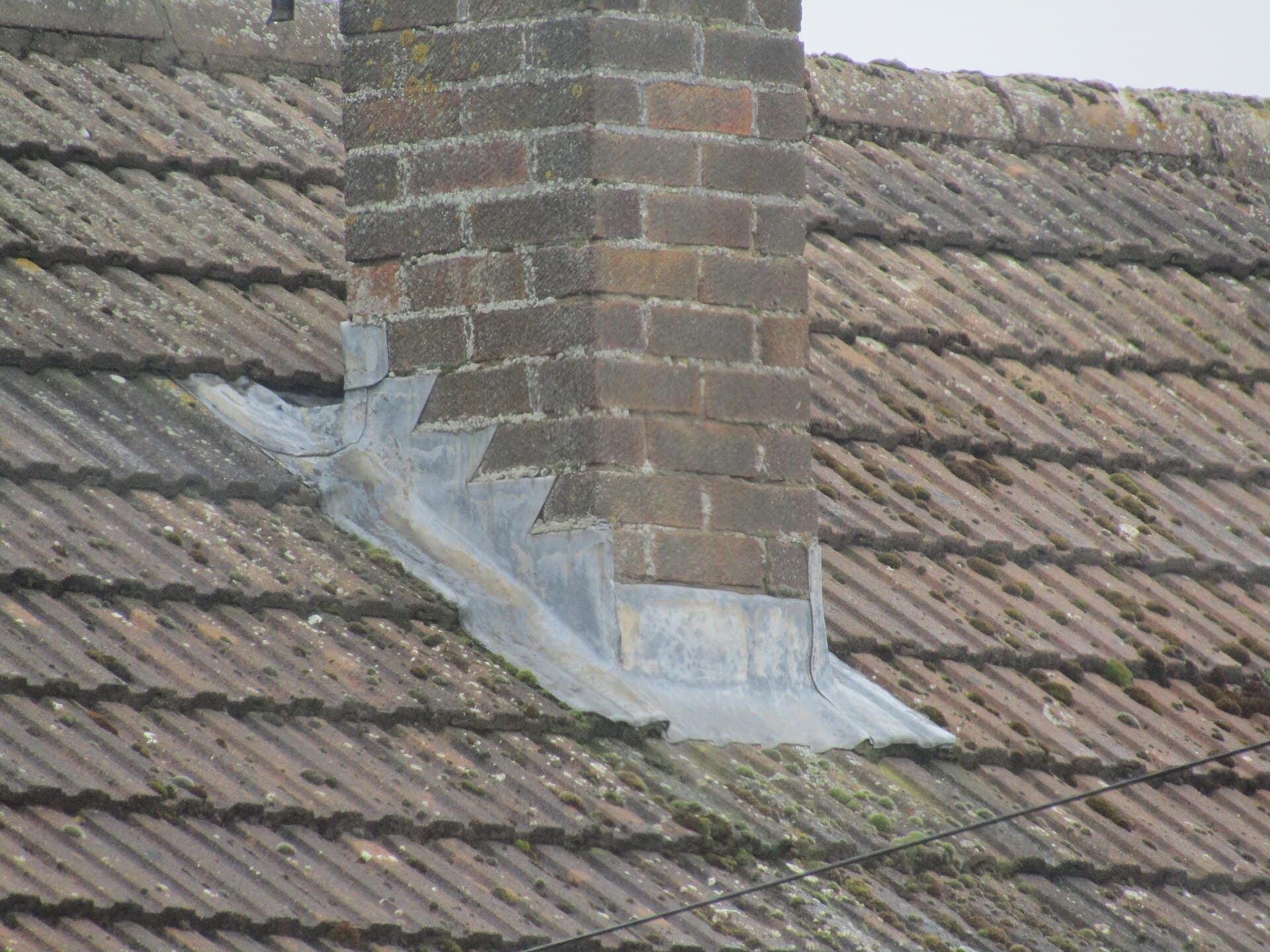
Lead flashing around a chimney base (Norfolk, England). Photo credit: Kolforn.
Common questions
TimingWhy does my chimney leak only when it rains or snow melts?
Water only gets in when there is enough of it. A cracked crown, worn flashing or a missing cap can stay dry in light weather and leak in a heavy rain or a fast thaw.
DIYCan I fix chimney flashing myself?
Small sealant touch-ups are sometimes done by homeowners, but flashing is woven into both the roof and the chimney, and the work happens high up on a steep surface. Most homeowners hire it out. Sealant alone often fails sooner than properly installed flashing.
SealersWill a waterproofing sealer stop my chimney leaking?
A vapor-permeable water repellent can help brick that is in good shape. It will not fix a cracked crown, failed flashing or open mortar joints, and a film-forming sealer can trap moisture inside the brick.
CostHow much does chimney leak repair cost?
Caps typically run $150–$850, crown repair $200–$1,500 and flashing $200–$1,500. Tuckpointing runs $500–$2,500 when failing mortar is the cause. Those are national averages, not Fargo quotes.
Keep reading
- Chimney masonry repair in Fargo
- Chimney sweep and inspection in Fargo
- What chimney repair costs in Fargo
Last updated October 26, 2026.
Free chimney quote
Tell us what is wrong and where you are. A local pro takes it from there. It costs you nothing.