Fireplace repair in Fargo
The firebox and damper are the parts of a fireplace you see and use. When they fail, you notice.
Prefer to talk? Call (701) 936-7113.
Request a free quote
Signs your fireplace needs repair
- Cracked, loose or missing firebrick
- Mortar between the firebricks falling out
- A damper that will not open, close or seal
- Smoke spilling into the room instead of going up
- A cold draft coming down when the damper is closed
- Rust or white deposits inside the firebox
The firebox
Firebrick lines the firebox because it can take the heat. Hairline cracks are common and often cosmetic. Wide gaps, missing bricks or lost mortar can expose the wall behind the firebox to heat, so they need repair before more fires. Firebrick is bonded with refractory mortar, not ordinary mortar.
The damper
A damper that will not close lets heated air escape up the chimney. One that will not open lets smoke into the room. Many dampers can be repaired or replaced. A top-sealing damper sits at the top of the flue and seals better than the old throat damper.
Smoke spilling into the room
Poor draft has several causes: a cold flue, a blocked flue, a cap or liner problem, or a house sealed so tightly the fireplace cannot pull air. A pro can check the flue and the room.
Gas fireplaces and inserts
Gas logs, inserts and fireplaces involve gas lines and controls. That work belongs to a licensed gas fitter or an HVAC technician, not a mason. Tell us it is a gas appliance when you request a quote. If you smell gas, leave the house and call 911 or your gas utility.
When to stop using it
If the firebox has wide gaps or missing brick, if smoke enters the room, or if you smell smoke when the fireplace is cold, stop using it until a pro has looked.
Chimney details, up close
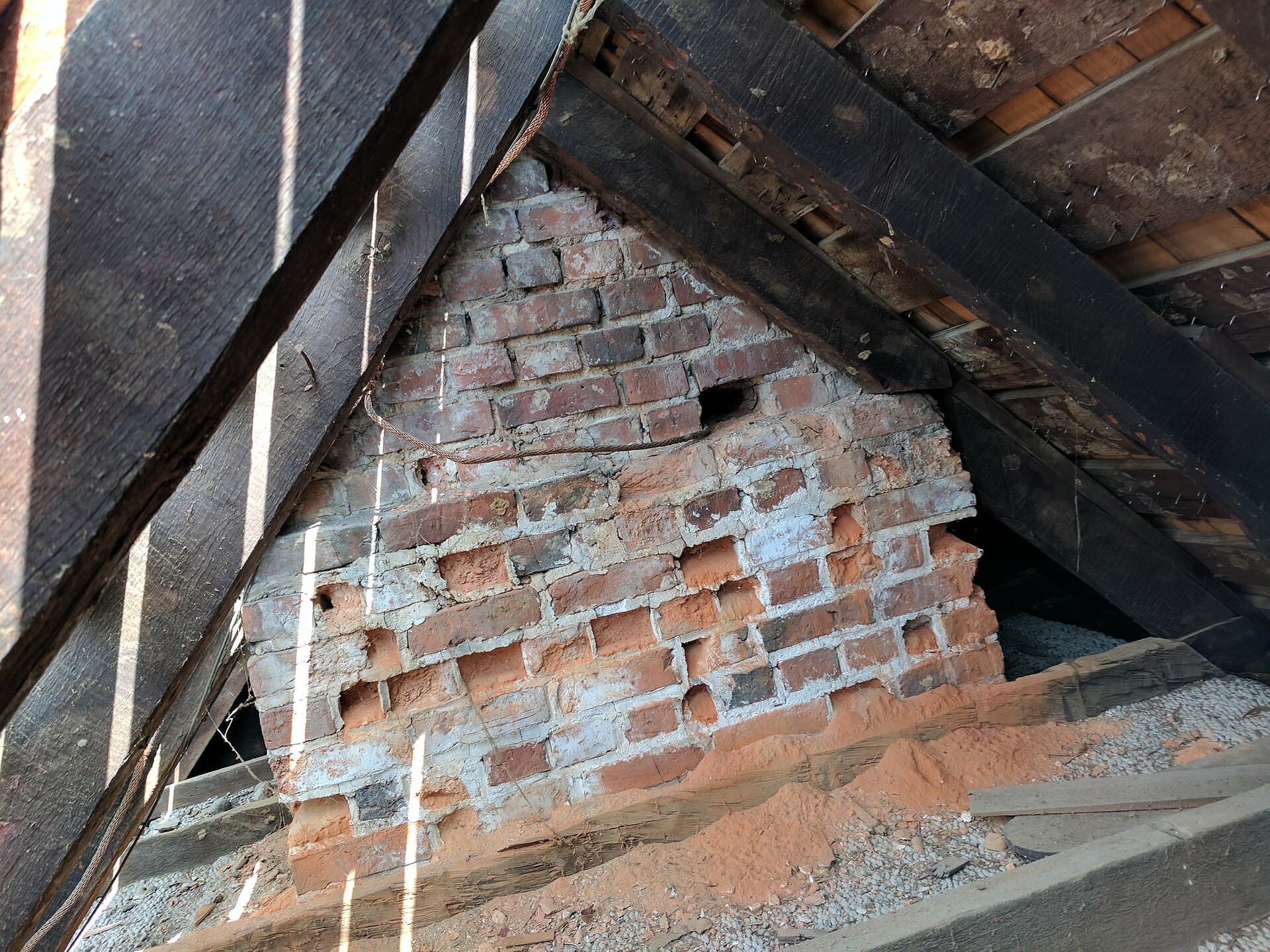
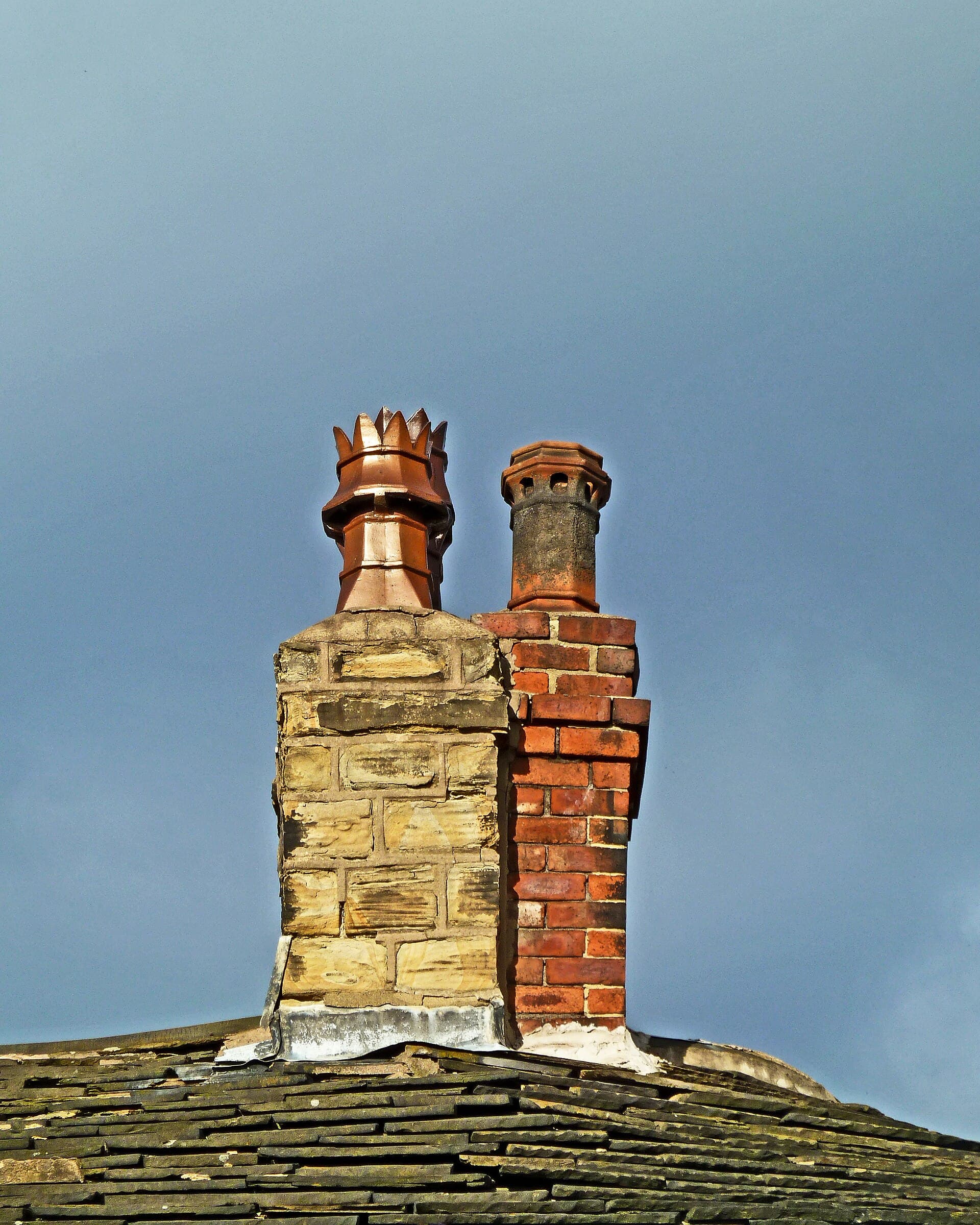
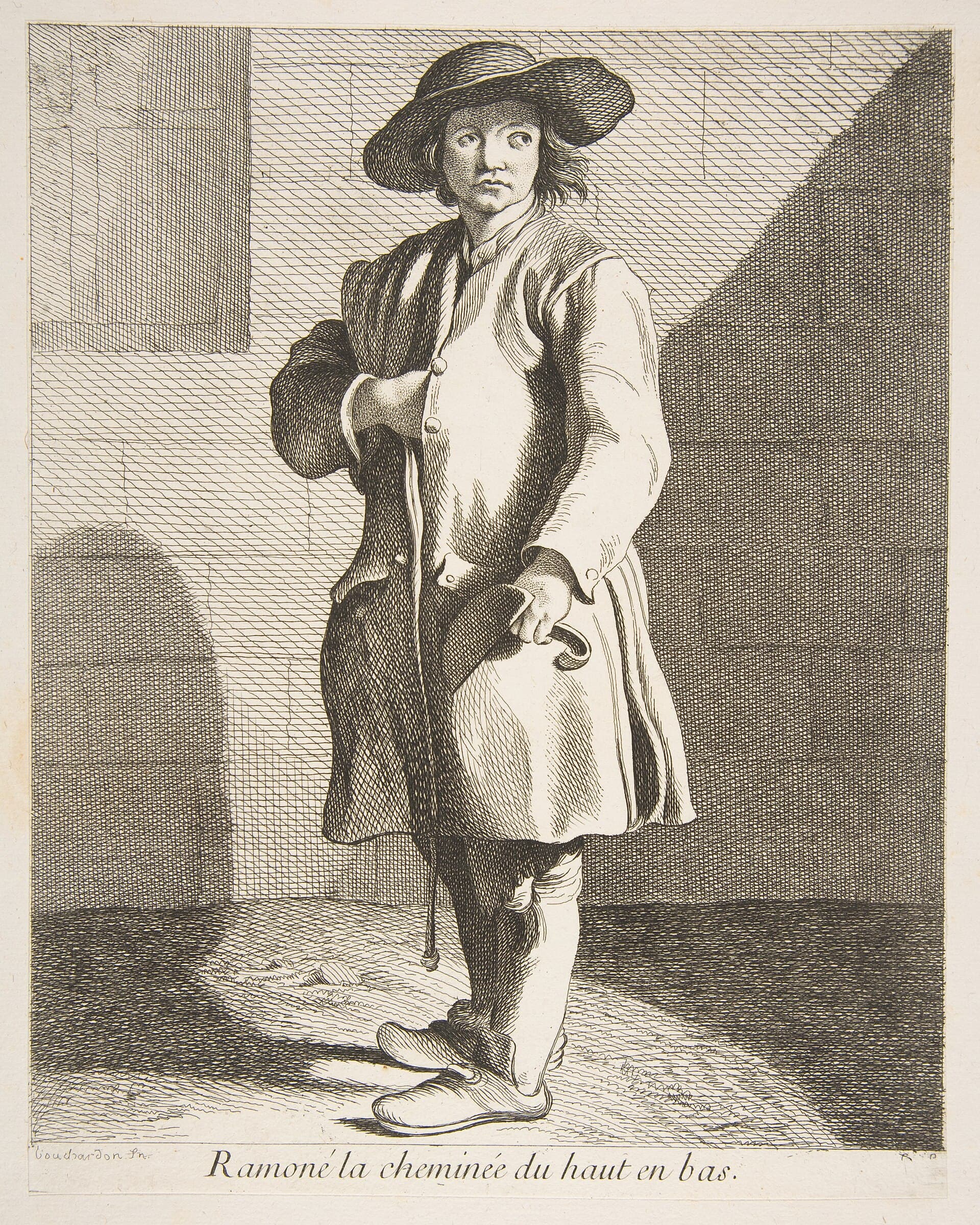
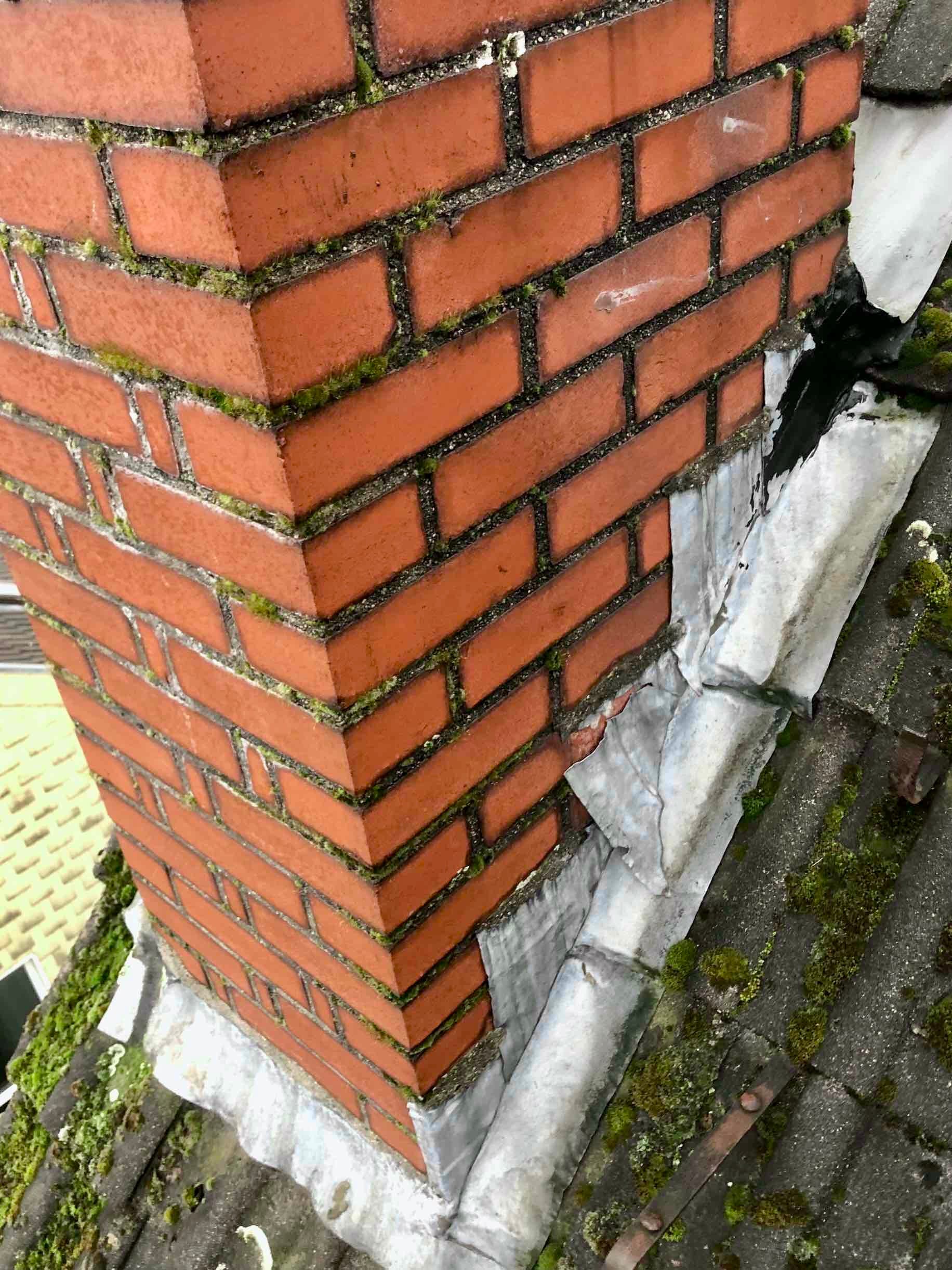
Brick chimney with lifting flashing (Mettmann, Germany). Photo credit: KaiKemmann.
Common questions
SafetyIs a cracked firebrick dangerous?
Narrow hairline cracks are common and usually fine. Wide cracks, loose bricks or gaps in the mortar can let heat through to the framing behind. Have a pro look before you use it again.
SmokeWhy does my fireplace smoke?
Common causes are a cold flue, a blocked or damaged flue, a missing or clogged cap, a damper that is not fully open, or a house that is sealed too tightly to supply air. Cracking a window can show whether air supply is the problem.
DIYCan I replace a fireplace damper myself?
Homeowners sometimes replace a damper handle or clamp. Replacing the damper itself means working in the throat of the fireplace and often at the roof, so most people hire it out.
CostHow much does fireplace repair cost?
The cost guides we checked do not give a reliable national range, because fireplace repair covers everything from a damper handle to a rebuilt firebox. Ask for an itemized quote. For the chimney above the fireplace, see our cost guide.
Keep reading
Last updated October 26, 2026.
Free chimney quote
Tell us what is wrong and where you are. A local pro takes it from there. It costs you nothing.